
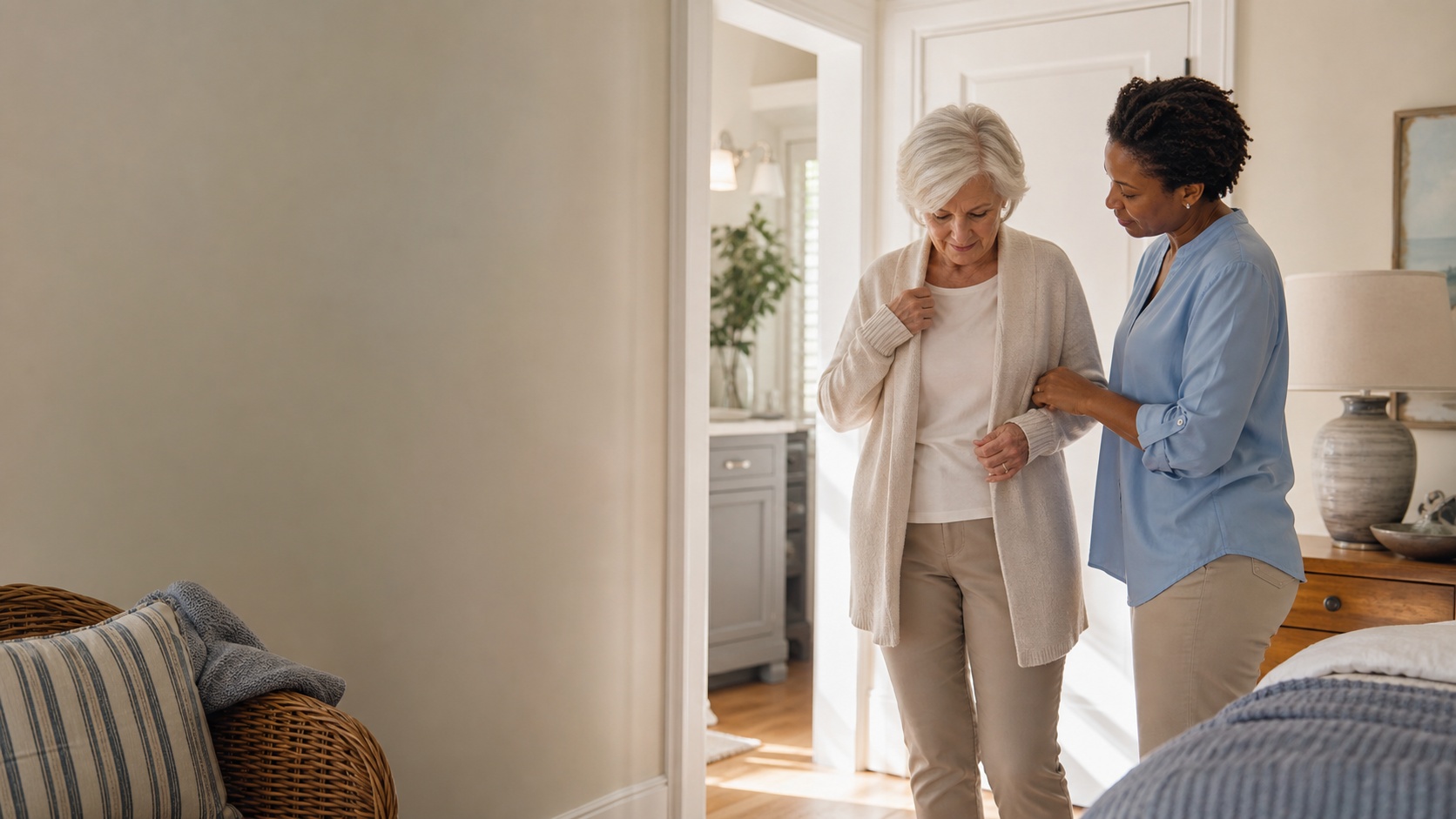
Personal care assistance helps older adults with the private daily tasks that become difficult, exhausting, or unsafe to manage alone. Home Care Charleston SC provides non-medical support with activities of daily living across the Charleston Metro — bathing, dressing, grooming, toileting, transfers, mobility, and meal routines.
This is not just about checking tasks off a list. It is about dignity, comfort, safer daily living, and less worry for the family.
What Personal Care Covers
Bathing and Hygiene Support
Bathing, showering, oral care, and skin care routines require sensitivity. Our caregivers follow the care plan, respect the person's comfort level, and prioritize bathroom safety.
Dressing and Grooming Help
Getting dressed, choosing appropriate clothing, brushing hair, and morning or evening grooming routines help the day feel normal and unhurried.
Toileting and Incontinence Support
Caregivers assist with toileting routines and incontinence care in a private, respectful manner. The care plan defines exactly what help is needed and how privacy is protected.
Mobility, Transfers, and Fall-Risk Awareness
Caregivers help with moving around the home, standing from a chair, transferring between surfaces, and maintaining safer daily routines. They also observe changes and report concerns to the family.
Feeding and Meal Routine Support
When meals are missed or eating becomes difficult, caregivers support meal setup, cueing, hydration reminders, and a more consistent eating schedule.
How Our Personal Care Process Works
Private Needs Review
We start by understanding which daily tasks are difficult, what feels unsafe, and what the person receiving care prefers. This covers bathing routines, mobility, bathroom safety, home setup, family concerns, and privacy expectations.
Respectful Care Plan
The care plan converts needs into specific visit instructions. Activities of daily living become clear tasks, which helps caregivers deliver consistent support and helps families know exactly what to expect.
Caregiver Matching
Personal care is deeply personal. We match caregivers based on skill, comfort level, personality, schedule, and the specific support required.
Ongoing Family Communication
Families receive updates about routine changes, concerns observed during visits, and care plan adjustments that may improve the situation.
Explore Related Services
Companion Care — Personal care can be combined with companion care when a loved one also needs conversation, errands, meal preparation, reminders, or light household routines.
Dementia and Alzheimer's Care — When personal care needs are affected by memory loss, confusion, or changing behavior, dementia-informed support may be a better fit.
24-Hour Home Care — If personal care needs are frequent throughout the day or night, extended care or 24-hour coverage may be appropriate.
Personal Care Service Areas
Areas we serve: Charleston, Mount Pleasant, North Charleston, Summerville, West Ashley, James Island, Johns Island, Daniel Island.
Why Choose Home Care Charleston SC for Personal Care?
Personal care requires trust. You are inviting someone into the most private moments of daily life. Home Care Charleston SC focuses on practical care plans, respectful support, and a consultation process that helps families make a careful, informed decision.
Many Lowcountry homes add their own challenges — the older raised houses common downtown and in West Ashley come with steep stairs and narrow bathrooms, exactly the spots where bathing and transfers turn risky. We build the care plan around the home you actually live in, not a generic checklist.
Frequently Asked Questions About Personal Care Assistance
What are activities of daily living?
Activities of daily living (ADLs) are basic self-care tasks: bathing, dressing, grooming, toileting, transferring, walking, and eating.
Can caregivers help with bathing and toileting?
Yes, when those tasks are included in the care plan and the provider is qualified to offer that level of non-medical personal care. We discuss the details during the consultation.
How is privacy protected during personal care?
Through clear care instructions, respectful communication, appropriate caregiver matching, and routines that let the person do as much independently as they safely can.
Can personal care be combined with companion care?
Yes. Many families combine personal care with companion care, meal preparation, errands, light housekeeping, reminders, and family communication.
Care Planning Details for Personal Care Assistance
Personal care decisions usually begin when private daily routines become harder to complete safely or consistently. These details help families think through the level of hands-on support, privacy expectations, and daily living tasks that should be included in a care plan.
Activities of Daily Living Support
A personal care plan can organize help around activities of daily living while preserving as much independence as possible.
- Bathing, dressing, grooming, toileting, transfers, walking, and eating routines
- Bathroom safety, fall-risk awareness, and mobility reminders
- Morning, evening, or mealtime support based on the most difficult part of the day
Privacy, Dignity, and Comfort
Hands-on care works best when expectations are specific before visits begin.
- Preferred routines, clothing choices, hygiene products, and privacy boundaries
- Caregiver matching based on comfort level, personality, and care needs
- Clear visit notes so family members know when routines change
When Personal Care May Need to Increase
Families often start with a few visits and adjust when needs change.
- More frequent help after a fall, illness, medication change, or hospital stay
- Added companion care for meals, hydration, errands, and household routines
- Extended visits when transfers, toileting, or evening routines become harder
What to Discuss Before Care Starts
During the consultation, families should discuss which tasks require hands-on help, which tasks the person can still do independently, and what schedule would make the home routine safer.
Pricing and Payment Factors
Pricing for personal care assistance depends on the visit schedule, visit length, level of hands-on support, mobility or transfer needs, caregiver availability, and whether care is temporary or ongoing. Families should request a care-plan-based estimate rather than relying on a generic hourly assumption.
Personal Care Assistance Service Areas Throughout the Charleston Metro
Mount Pleasant, SC
East Cooper families planning errands, appointments, and daily support.
North Charleston, SC
Practical in-home help across North Charleston and nearby communities.
Summerville, SC
Flexible support for Summerville families and Dorchester-area routines.
West Ashley, SC
Safer days at home across West Ashley neighborhoods and nearby areas.
James Island, SC
Care planning for James Island homes, spouses, and family caregivers.
Johns Island, SC
Longer-distance scheduling support for Johns Island families.
Daniel Island, SC
Reliable daily care, companionship, and respite for Daniel Island homes.