
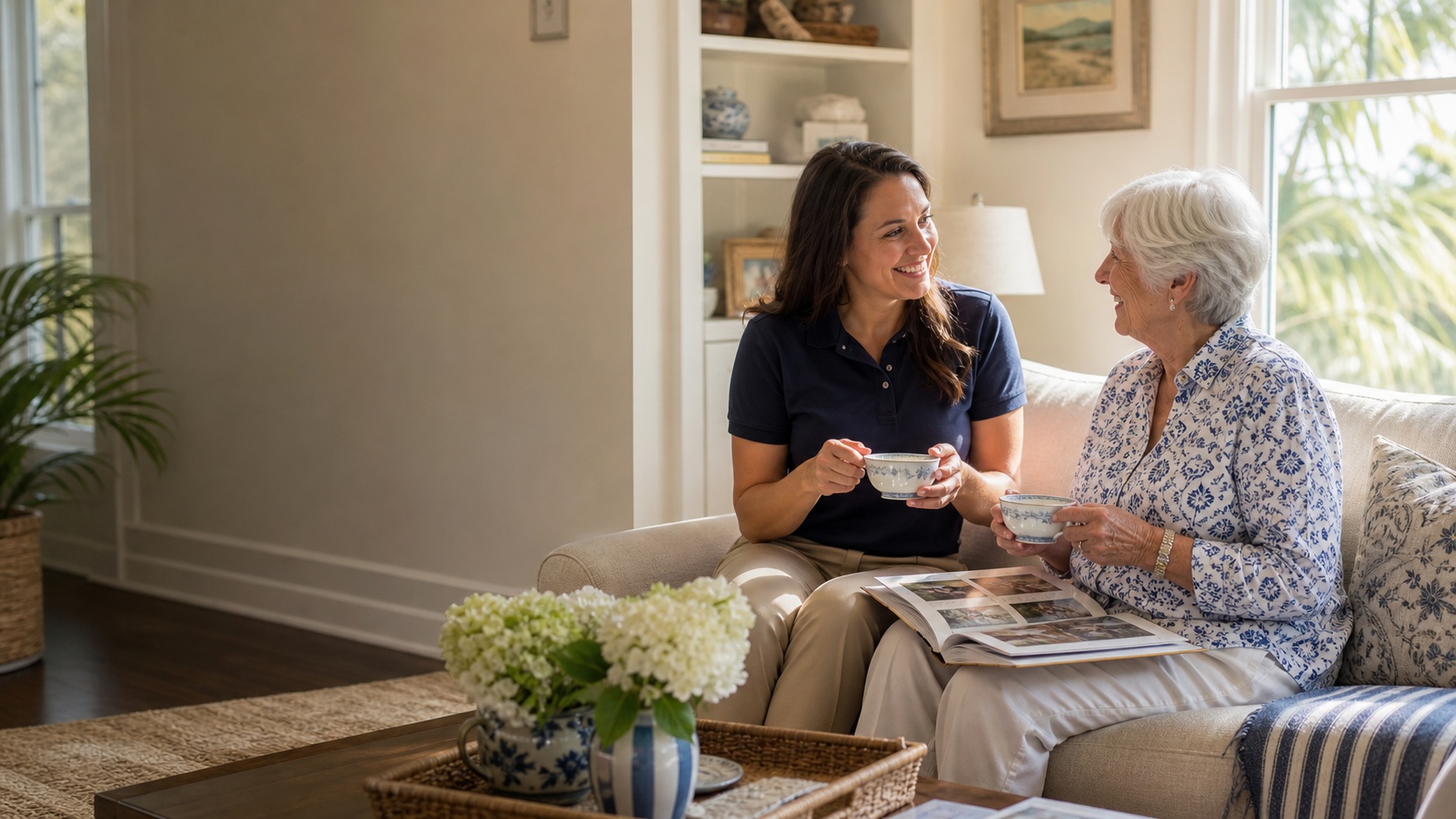
Companion care gives older adults regular social connection and practical help with everyday routines. For families across the Charleston Metro, this service reduces isolation, supports safer daily habits, and makes life at home feel less lonely.
Home Care Charleston SC provides non-medical companion care that includes conversation, meal preparation, errands, incidental transportation where permitted, medication reminders, light housekeeping, and meaningful activities.
What Companion Care Covers
Conversation and Social Engagement
Regular conversation, shared activities, reading, games, walks, hobbies, and familiar routines make the day more engaging. Companionship is especially valuable when an older adult lives alone or family cannot visit as often as they would like.
Meal Preparation and Hydration Reminders
Caregivers prepare simple meals, encourage hydration, and support a more consistent eating routine. This matters when appetite, energy, or motivation has changed.
Errands and Incidental Transportation
When permitted by company policy and insurance, companion care includes errands, grocery trips, pharmacy pickups, and transportation to appointments or social activities.
Medication Reminders
Non-medical caregivers remind clients to take medications as directed. We do not manage, prescribe, or administer medication — that requires a licensed medical professional.
Light Housekeeping and Home Routines
Dishes, laundry, tidying common areas, taking out trash, changing linens, and keeping the home easier to navigate.
How Our Companion Care Process Works
We start by learning about personality, preferences, household routines, social needs, and family concerns. Then we build a care plan that gives the caregiver clear visit tasks and gives the family realistic expectations.
Companion care can be scheduled as a few visits per week, recurring daily support, or as part of a broader plan that includes personal care, respite, dementia support, or post-hospital assistance.
Explore Related Services
Personal Care Assistance — When companionship is not enough and hands-on help is needed for bathing, dressing, toileting, mobility, or transfers, personal care assistance is the next step.
Respite Care — Companion care also provides relief for family caregivers who need dependable coverage while they rest, work, or handle other responsibilities.
Dementia and Alzheimer's Care — For a loved one living with dementia, companionship may need additional structure, supervision, and family communication.
Companion Care Service Areas
Areas we serve: Charleston, Mount Pleasant, North Charleston, Summerville, West Ashley, James Island, Johns Island, Daniel Island.
Why Choose Home Care Charleston SC for Companion Care?
Companion care works when the caregiver is reliable, well matched, and clear about the visit routine. Home Care Charleston SC helps families define what kind of support is needed, how often visits should happen, and how updates should be shared.
The Lowcountry draws a lot of retirees who moved here for the climate and the coast, often leaving their adult children several states away. That distance is a common reason families ask about companion care — someone local to share a meal, drive to an appointment, and notice when something is off between long-distance visits.
Frequently Asked Questions About Companion Care
What does a companion caregiver do?
A companion caregiver provides social engagement and practical non-medical help: conversation, meal routines, errands, reminders, light housekeeping, and activities.
Is companion care only for seniors who live alone?
No. Companion care helps older adults who live alone, with a spouse, with family, or in another residential setting where services are permitted.
Can companion caregivers provide transportation?
Transportation depends on company policy, caregiver availability, insurance, and the care plan. Ask during the consultation so expectations are clear.
Can companion care include medication reminders?
Yes. Non-medical companion care can include medication reminders. Medication management or administration is different and requires a qualified medical professional.
Care Planning Details for Companion Care
Companion care is often the right starting point when the main concerns are isolation, missed meals, low activity, errands, reminders, or a daily routine that has become too loose. The goal is consistent support without turning every visit into a medical or facility-style experience.
Daily Routine and Social Connection
Regular visits can give the day more structure and help older adults stay engaged at home.
- Conversation, reading, hobbies, walks, games, and meaningful activities
- Meal preparation, hydration reminders, and light kitchen cleanup
- Check-ins that help families notice changes in mood, appetite, or routine
Errands, Appointments, and Household Tasks
Companion visits can reduce the small tasks that become stressful for families to coordinate from a distance.
- Grocery trips, pharmacy pickups, appointment reminders, and local errands when allowed
- Light housekeeping such as dishes, laundry, linens, trash, and tidying common areas
- Medication reminders only, unless a qualified medical provider is responsible for medication administration
When Companion Care Is Not Enough
Companion care can be combined with other services if needs become more hands-on.
- Add personal care when bathing, dressing, toileting, or transfers become difficult
- Add respite care when a family caregiver needs scheduled relief
- Add dementia-informed routines when memory loss or confusion affects safety
What to Discuss Before Care Starts
A good companion care plan should reflect personality, preferred activities, meal habits, transportation rules, family communication preferences, and the kind of day the person wants to maintain.
Pricing and Payment Factors
Companion care pricing is usually shaped by visit frequency, visit length, errands or transportation needs, household tasks, schedule consistency, and caregiver availability. Ask during the consultation how pricing changes when companion care is combined with personal care, respite care, or post-hospital support.
Companion Care Service Areas Throughout the Charleston Metro
Mount Pleasant, SC
East Cooper families planning errands, appointments, and daily support.
North Charleston, SC
Practical in-home help across North Charleston and nearby communities.
Summerville, SC
Flexible support for Summerville families and Dorchester-area routines.
West Ashley, SC
Safer days at home across West Ashley neighborhoods and nearby areas.
James Island, SC
Care planning for James Island homes, spouses, and family caregivers.
Johns Island, SC
Longer-distance scheduling support for Johns Island families.
Daniel Island, SC
Reliable daily care, companionship, and respite for Daniel Island homes.